A detailed introduction to Typology’s T10 tinted serum: its light natural finish, vitamin C–aloe–squalane formula, shade selection and the brand’s actual application method.
What Tinted Serum T10 is designed to do
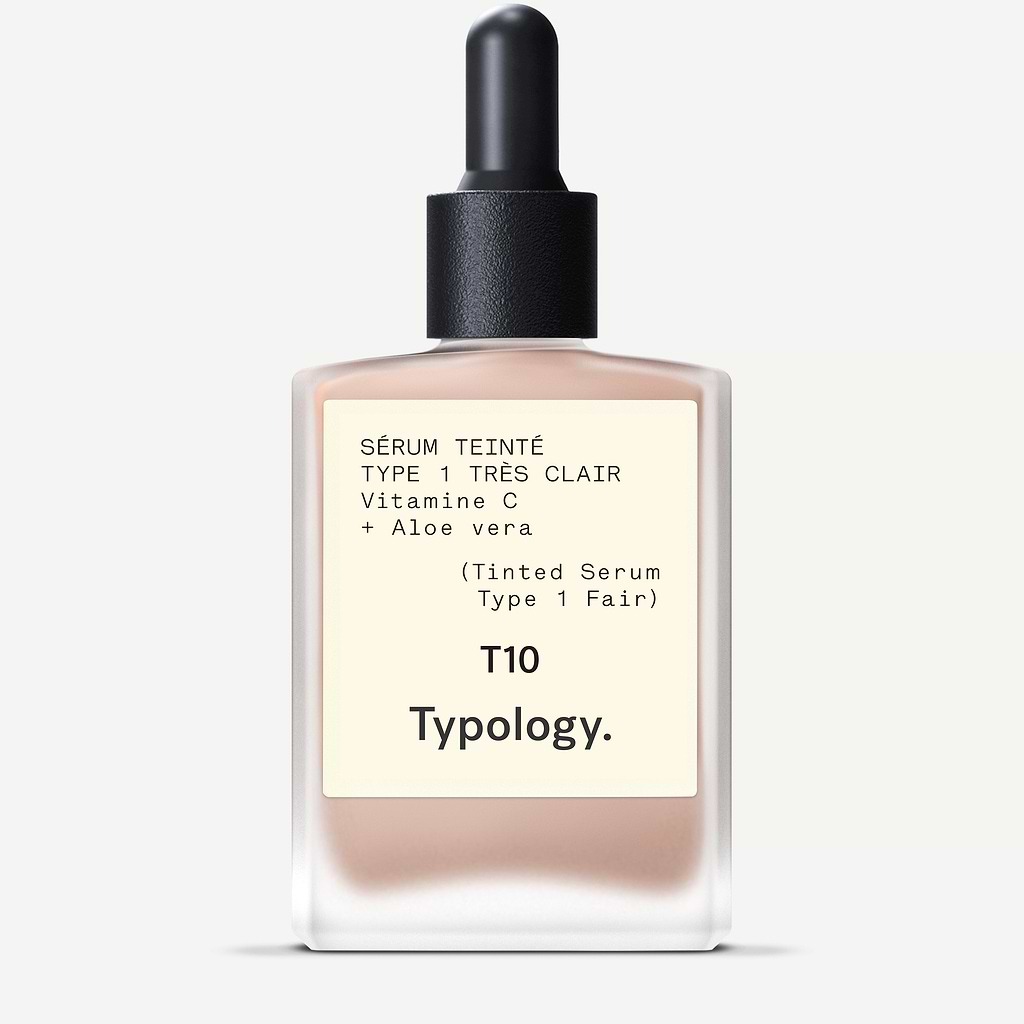
T10 is Typology’s tinted facial serum, a product placed between skincare and complexion makeup. It combines a tint with a fluid skincare-style format, aiming to make the complexion look more even while retaining a natural finish. The official product page lists a 30 ml glass bottle with a dropper. This is a specific tinted formula, not the same thing as a clear vitamin C serum with a similar-looking bottle.
The defining feature is light coverage rather than an opaque foundation effect. It is an option to examine when you want the skin itself to remain visible and the overall colour to look more even. If your main goal is concentrated coverage in one small area, that is a different task from applying a sheer tint across the whole face.
Coverage and the kind of finish to expect
Typology describes a natural, second-skin finish and says coverage can be adjusted by changing the amount applied. This is not the same as promising that repeated layers will become identical to a full-coverage foundation. The practical distinction is between evening the overall appearance and concealing every individual mark.
The brand presents T10 as a daily-use product for all skin types, with a tested non-comedogenic positioning. These describe the manufacturer’s intended use and testing claims, not our own wear-test results. For a meaningful assessment, consider the visible finish, how much coverage you actually want and how it works with your existing moisturiser rather than treating a tinted serum as an automatic replacement for every complexion product.
Vitamin C, aloe vera and squalane
The three ingredients highlighted on the product page are vitamin C, aloe vera and plant-based squalane. Typology links the formula to radiance, hydration and skin comfort. The tint remains an important part of the product’s identity: this is both a colour product and a skincare-format formula, rather than a treatment serum whose primary purpose is unrelated to makeup.
The current page describes T10 as silicone-free, fragrance-free and vegan, and reports 99% naturally derived ingredients. Those are formula statements for this product. A natural-origin percentage is not the same as a percentage of vitamin C, and the page’s headline should not be turned into an invented concentration. Check the current ingredient list if you are comparing specific formulations.
How to choose among the six shades
Typology offers six shades and explains that the light coverage allows each one to span more than one skin tone and undertone. The selected product viewed during research was Type 1 / Fair. That is a shade identifier, not the only available version. When comparing photographs, keep the full shade name alongside T10 so that a fair packshot is not mistaken for the whole range.
The brand’s shade guidance says to choose the lighter option when genuinely between two shades, and to let the applied serum dry before judging the colour because it can change slightly as it dries. It also relates its shade development to the Fitzpatrick phototype scale. A practical check is the dried colour against the face and neck, rather than deciding only from the colour in the glass bottle.
The official application method
Typology places application after moisturiser and suggests approximately one dropper for the face as its starting amount, with coverage adjusted if desired. Its instructions allow fingers or a brush. Distribute from the centre outward and take the colour towards the neck so that the face does not end in an obvious edge of tint.
That gives a concrete method, not a universal obligation to use exactly the same amount every day. Observe the finish after the first application before adding more. If you want only small targeted areas concealed, distinguish that separate task from increasing an all-over tint. T10 is presented here as tinted care, not as a substitute for a separately chosen sunscreen.
How to fill the dropper without fighting the bottle
The product FAQ gives a specific answer for a pipette that seems reluctant to draw the fluid. Lift the dropper out of the serum, empty it and squeeze the bulb to push out the air. Keep the bulb compressed while putting the pipette back under the surface. Then release the pressure slowly so the liquid is drawn into the tube.
The order is the useful detail: compress first, immerse while still compressed, then release. Squeezing after the tip is already submerged is not the sequence described in the FAQ. This is a packaging-use instruction for the T10 dropper, not a reason to assume a nearly empty pipette means the bottle itself contains no product.
T10 versus T20 concealer and T31 glow drops
The same product page also points to Tinted Concealer T20 and Glow Drops T31. Their names describe different complexion tasks: an overall sheer tint, a concealer and a glow product are not interchangeable merely because they share Typology packaging. The page identifies T20 with caffeine and cornflower hydrolate, and T31 with vitamin C and aloe vera; these names should remain attached to the correct product.
A useful way to read the range is to choose the main task first. For a light overall tint, examine T10 and its shade. For a targeted concealer, compare the separate T20 description. For a glow-focused product, read T31 on its own terms. You do not need to assume that every suggested pairing is required. This introduction explains the products and their use, without pretending to be a foundation wear test.