A closer look at Clarins cleansing milk, foaming cleansers, waterproof makeup removers and three toners, with a practical way to choose without buying every step.
What is actually in the Clarins cleansing range?
Clarins separates makeup removal, facial cleansing and toning into different products. Its current French catalogue includes Lait Démaquillant Visage, Huile Démaquillante Waterproof, dedicated eye makeup removers, several Doux Nettoyant foaming cleansers and three Lotion Tonique options. These names describe different jobs, not a compulsory sequence in which every bottle must be used.
The useful starting point is what needs to come off at the end of your day: ordinary makeup, waterproof eye makeup or simply everyday surface residue. Next consider whether you prefer a creamy texture or a wash-off foam. A toner is a separate optional step; it is not a substitute for a makeup remover or a facial cleanser.
Cleansing milk, cleansing oil and eye makeup remover
Lait Démaquillant Visage is the creamy option in the range. Clarins describes it as a comforting milk that removes makeup. Its texture makes it a different proposition from a foaming wash: the choice is partly about the feel you enjoy and the removal method specified on that bottle, rather than assuming that thicker means stronger cleaning.
Huile Démaquillante Waterproof is the oil format explicitly presented for waterproof makeup. The eye products are another distinction: Démaquillant Douceur Yeux is positioned for sensitive eyes, while Démaquillant Biphasé Waterproof is the two-phase waterproof option. A face cleanser should not automatically be treated as an eye makeup remover. Check the permitted application area and removal directions of the exact product.
How the foaming cleansers differ
Doux Nettoyant Moussant Hydratant is the hydrating member of the family. Doux Nettoyant Moussant Apaisant is presented for dry skin, with a comforting cleansing position. Nettoyant Visage Purifiant – Doux Nettoyant focuses on removing excess sebum. These are alternatives within a range; there is no reason to use all three one after another.
Two other names need separate attention. Mousse Nettoyante Visage – Peau Neuve is a foam marketed around a freshly cleansed, brighter-looking complexion. Gommage Nettoyant Visage – Doux Nettoyant includes an exfoliating function. A cleanser described as a gommage is not automatically interchangeable with the plain everyday cleanser you already tolerate. Read its own use frequency rather than transferring another product’s routine to it.
The three toners: Hydratante, Apaisante and Purifiante
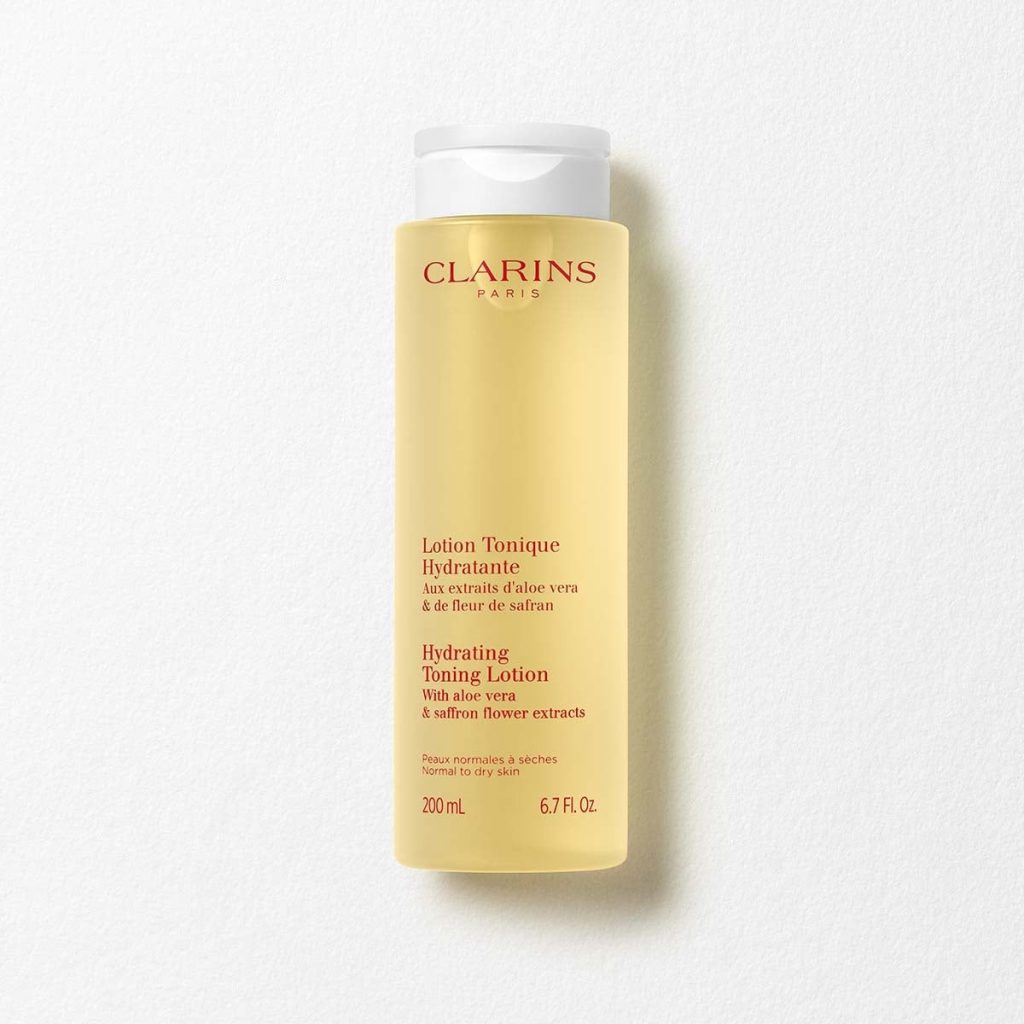
Lotion Tonique Hydratante à l’Aloe Vera is positioned by Clarins for normal to dry skin. Lotion Tonique Apaisante is directed at very dry or sensitive skin. Lotion Tonique Purifiante is aimed at combination to oily skin. That makes skin feel and the brand’s stated audience more useful starting points than the colour of the packaging.
A toner follows cleansing if you choose to include one. It does not remove the need to wash off a rinse-off cleanser, and the name Purifiante does not turn it into a treatment for a skin condition. Equally, Hydratante is not a reason to dispense with every other moisturising product. The choice should make your existing routine more comfortable and understandable, not simply longer.
A simple way to put the products in order
For a makeup-wearing evening, first choose a remover suited to the makeup involved. Waterproof eye makeup may need the specifically labelled eye remover rather than repeated rubbing with a general face product. Then follow the cleanser’s actual directions, including rinsing wherever required. You do not need a cleansing milk, an oil and several foams merely because they belong to the same brand.
If you use a toner, place that after cleansing and before the moisturising steps you already use. On a day without makeup, reassess whether a separate makeup-removal step adds anything. This is a way to organise the product categories, not a prescribed routine for every skin type or an instruction to add more cleansing.
What to compare before choosing a bottle
Compare the full product name, intended skin type, rinse-off or leave-on directions and the application area. Also compare the size and unit price: Clarins lists several sizes for some toners and removers, while some foaming cleansers are listed as a single 125 ml format. Prices, sets and available sizes change, so this guide deliberately does not freeze a promotional price into the article.
When replacing a favourite, check the current label rather than relying only on an older review. Similar names can cover different textures, and an eye remover and a face toner can both come in liquid bottles without sharing a purpose. The ingredients and directions on the product you receive take priority over a general description of the range.
Questions worth answering before adding another step
Do I need a toner? Not simply because I have bought a cleanser: the two are distinct categories, and the catalogue is not a checklist of mandatory purchases. Do I need to double cleanse? The relevant question is whether the chosen product removes what you actually wear according to its directions; more steps are not automatically better.
Can I pick everything by the word ‘gentle’? No: compare the exact format and intended area, particularly around the eyes and for waterproof makeup. This overview explains Clarins’s product positioning; it is not a hands-on wear test, a guarantee of individual tolerance or a claim that one range is best for everyone.