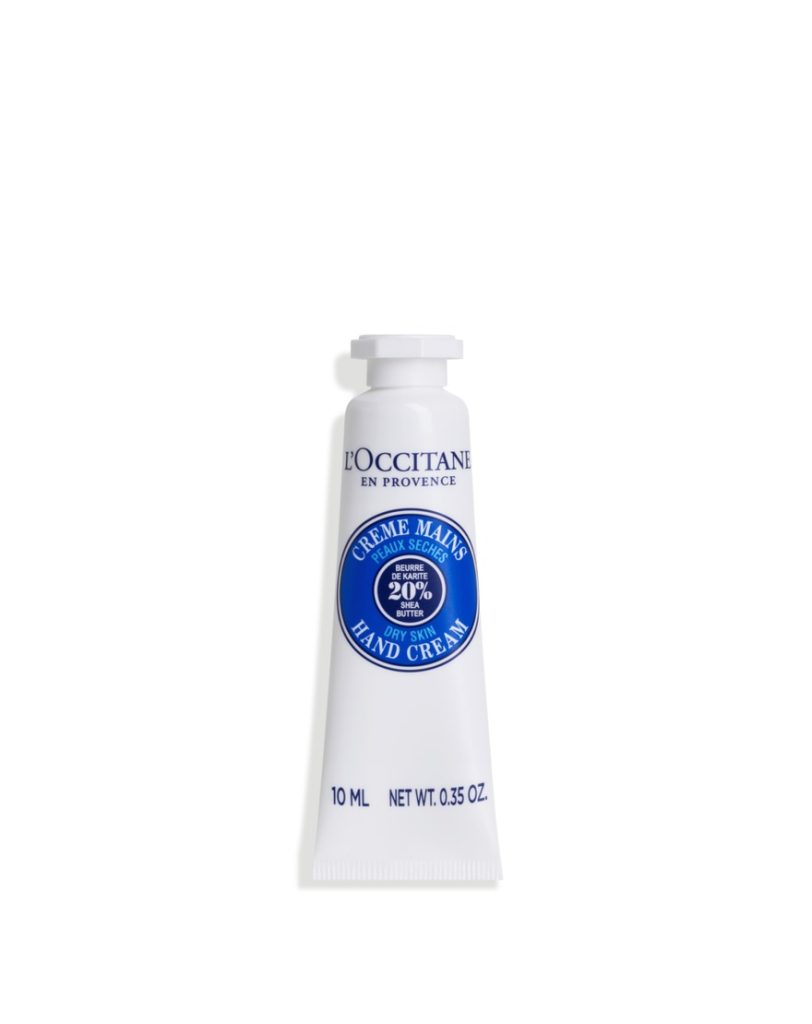
L’OCCITANE’s Shea Butter Hand Cream 49MA010K24 and Shea Butter Hand Balm 01BM150K26 are different products. The former lists 20% shea butter and a 10 ml format; the latter lists 25%, a richer balm and an optional ten-minute hand-mask application.
Two names with two distinct percentages
The official 10 ml Shea Butter Hand Cream sample reference is 49MA010K24 and explicitly states 20% shea butter. The separate Shea Butter Hand Balm page, reference 01BM150K26, states 25% shea butter and shows 50 ml and 150 ml options. The pages should not be blended into a fictional 25% hand cream or a 20% intensive balm. These percentages describe named shea-butter content, not the total share of all moisturising ingredients. The hand cream's reviewed 10 ml size is not the only size in the broader collection.
The hand cream's ingredient list
The 20% cream page puts Aqua, Butyrospermum Parkii (Shea) Butter, Glycerin, Coco-Caprylate/Caprate and Cetearyl Alcohol near the start of its INCI. It also lists argan, coconut and sunflower oils, Beta-Glucan and Tocopherol. The entire formula is therefore more than shea butter alone. One highlighted natural ingredient does not establish the concentration of every other component or show how an individual pair of hands will respond.
Fragrance is present in the cream
The official cream INCI includes Parfum/Fragrance, Linalool, Coumarin, Citronellol, Alpha-Isomethyl Ionone, Limonene and Geraniol. It must not be described as fragrance-free. Its 10 ml sample description mentions a convenient flip cap, easily absorbed feel and packaging the brand calls recyclable. Those are statements about this reference, not a guarantee that all tubes have the same cap or that every recycling service accepts the package.
What the cream's tests actually report
L’OCCITANE reports eight hours of intensive hydration based on corneometry on nine women in Poland. It separately reports clinical scoring for nourishment and softness involving 32 women in France, plus consumer-perception findings. Different group sizes and methods should not be combined as though the same test measured everything. The manufacturer also reports 97% noticing immediately soothed skin after one application in its communicated results. We have not repeated those tests, and none is an unconditional promise for every user.
The intensive balm's different formula
The 25% product is named Shea Butter Hand Balm, not Hand Cream. Its published INCI includes shea butter, glycerin, pentylene glycol, tapioca starch, sodium PCA, sunflower seed oil, Beta-Glucan and Allantoin in the product description. Check the current packaging for the exact version: a balm with a higher shea percentage is not simply the cream with five extra percentage points added. Its page addresses dry to very dry hands and describes a richer, protective texture, which is the brand's positioning rather than our own wear test.
Daily massage and the optional mask
For the balm, the official directions specify warming an amount between the hands and massaging palms, backs of hands, nails and cuticles twice a day. An additional intensive option is a thicker layer twice weekly, left for ten minutes and then massaged in. The ten-minute instruction belongs to the balm and must not be assigned to the 10 ml cream without evidence. Neither direction is a treatment for an underlying medical condition or a fixed dose in grams.
Compare by product name before copying claims
Both official ingredient lists contain fragrance, so neither of these reviewed formulas should be labelled perfume-free. Compare cream 20% and its smaller reviewed sample with balm 25%, its 50/150 ml size choices and optional mask instructions. Marketing phrases such as soothing, protective or sensitive-skin suitable are manufacturer claims; a known individual sensitivity still calls for checking the actual INCI and label. The cover image matches the 20% cream reference, not the distinct 25% balm. No external shopping links are needed to explain these products accurately.