
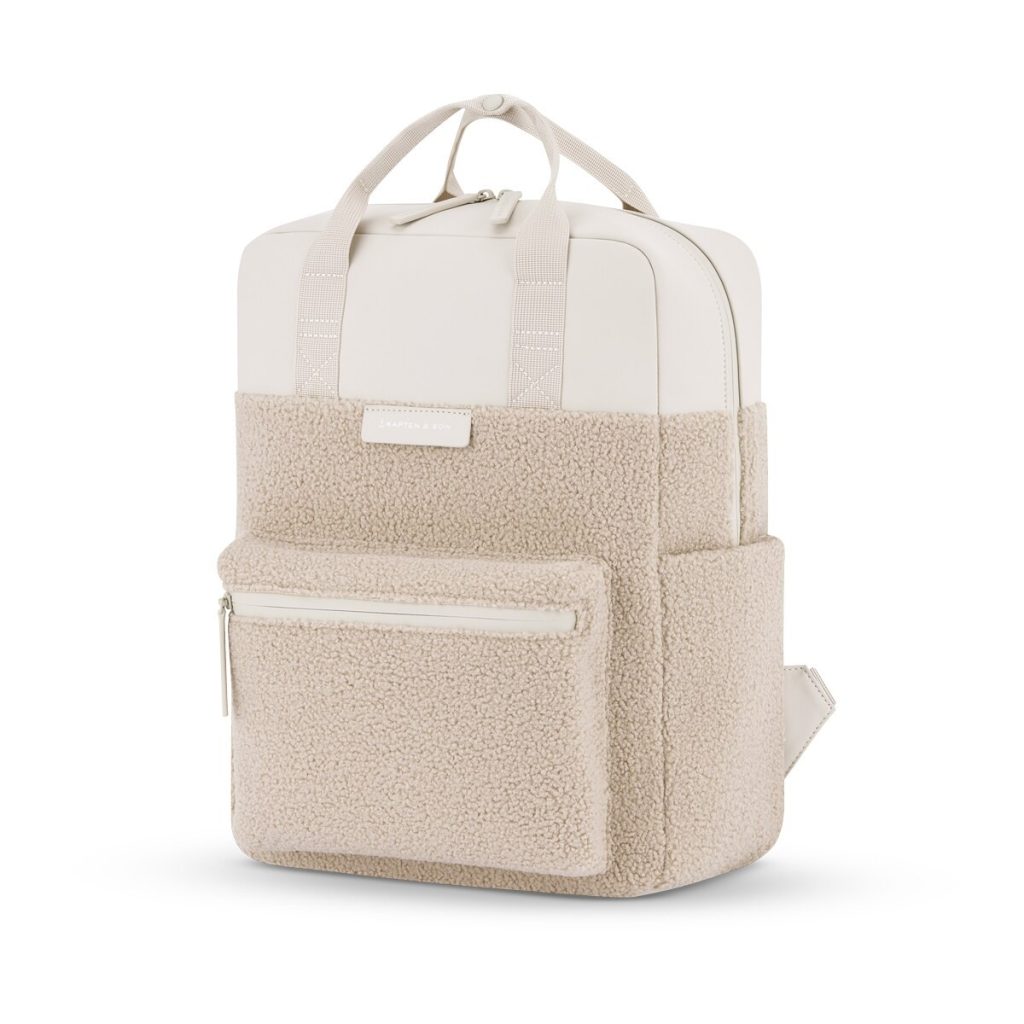
A product-by-product look inside Bergen Pro Fleece Sandstone: 15-litre capacity, a 35 × 27 cm laptop compartment, teddy-fleece finish, separate pockets and suitcase attachment.
A compact backpack with a textured exterior
Bergen Pro Fleece Sandstone is the teddy-fleece version of Kapten & Son’s Bergen Pro backpack. Sandstone identifies the colour, while Fleece describes the soft, textured finish. This distinction matters because the Bergen Pro family also includes other finishes; a smooth-looking version and this fleece model should not be treated as the same surface treatment.
The reviewed model combines that tactile exterior with a grey interior and a zip closure. Its specification is particularly relevant to an everyday load built around a computer, a tablet and small personal belongings. Rather than describing the entire brand’s bags, the dimensions and materials here refer specifically to this named version.
15 litres, 39 centimetres high and 0.9 kilograms empty
The official dimensions are 39 cm high, 28 cm wide and 11.5 cm deep, with a capacity of 15 litres. Its listed empty weight is 0.9 kg. These figures describe different aspects: litres indicate carrying volume, external measurements help visualise the shape, and empty weight is the starting point before adding devices and other items.
For packing, lay out the actual belongings you carry rather than judging only by the photograph. A laptop and charger, a notebook and a light layer may use space differently from a bulky lunch container. The presence of several compartments helps separate objects, but does not increase the stated total capacity beyond 15 litres.
The laptop compartment and separate tablet space
Kapten & Son specifies a laptop compartment measuring 35 × 27 cm and labels compatibility as 15.6-inch laptops and a 16-inch MacBook. The dimensions are more useful than a screen-size label alone: laptop chassis, protective sleeves and corner shapes differ. Measure the device with any sleeve you intend to keep on it before deciding whether the compartment suits it.
An additional tablet compartment is listed separately. This makes the organisation different from simply placing two screens into one open space. The official specification does not give this tablet compartment’s measurements, so the laptop dimensions should not be copied across as a tablet-size guarantee. Pack chargers and other hard accessories where they do not press against a screen.
Where the smaller belongings go
The storage layout includes two slip pockets, one on each side, a zipped front pocket, a rear anti-theft compartment and an internal zipped pocket. Together with the laptop and tablet sections, these provide different places for frequently used items and things you would rather keep inside the bag. A side slip pocket is a different arrangement from a securely zipped internal compartment.
The rear compartment is positioned on the back of the backpack. The brand calls it an anti-theft compartment; this describes a storage feature, not a promise that belongings cannot be stolen. For a practical layout, give travel documents and small valuables a deliberate place, then leave the front pocket for items you want to find without opening the main section.
Padding, adjustable straps and suitcase attachment
The listed carrying features are a padded back and padded, adjustable shoulder straps. Adjustment lets you position the backpack relative to your torso and clothing. The same load can feel different depending on how it is distributed, so heavier items are better considered as part of the packing plan rather than relying on padding alone to make any load comfortable.
A suitcase attachment is also included. This is useful when combining the backpack with rolling luggage and distinguishes the feature from the shoulder straps used for wearing it. It does not establish airline cabin-baggage approval: the backpack’s actual measurements, the way it is packed and the carrier’s rules still need to be considered separately.
What the material percentages actually say
For this version, the material entry is 76% recycled PET, 21% PU and 3% polyester. The product is marked vegan. The percentages describe a mixed-material specification, not a bag made entirely of recycled fibre. Likewise, the word fleece describes its finish; it should not be expanded into a claim that this is a wool or sheepskin backpack.
The reviewed product details do not supply a water-resistance rating or a machine-washing instruction. There is therefore no basis here to call it waterproof or machine washable. Keep care guidance for this precise fleece version with the bag, especially if comparing it with a visually similar Bergen Pro made with a different exterior.
Who this particular layout is likely to suit
The defining combination is a 15-litre rectangular bag, dedicated device storage, several small-item pockets and a suitcase attachment. It is worth considering when a compact everyday backpack and a softer-looking surface are both priorities. The 0.9 kg starting weight and the 35 × 27 cm computer compartment are useful checks before focusing on the colour.
The most informative comparison with another backpack is therefore not simply the word Pro. Compare capacity, external depth, empty weight, actual device dimensions and the location of the pockets you use. In Bergen Pro Fleece Sandstone, the teddy-fleece exterior is paired with a specific, documented storage layout rather than serving as the only product detail.